Summary
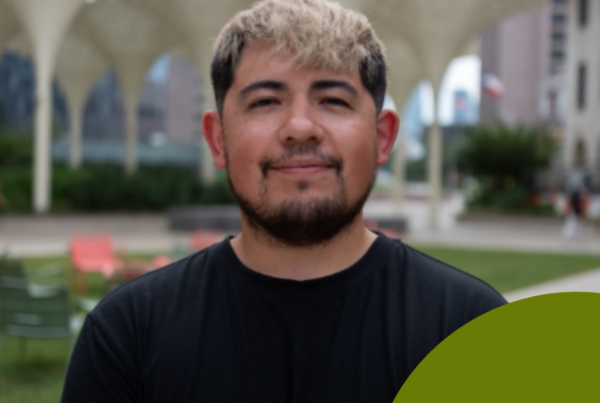
Meet Zaima Chowdhury, a Student Fellow whose commitment to disability advocacy is shaped by family experience, her own journey as a disabled student, and a growing interest in research, policy, and disability rights.

From Family Experience to Disability Advocacy
Zaima Chowdhury is a Student Fellow at the National Disability Center for Student Success and a Liberal Arts Honors government major at The University of Texas at Austin. She is also pursuing minors in Critical Disability Studies and American Sign Language.
For Zaima, disability advocacy began close to home. Growing up with her brother, who has a high-support-needs disability, shaped how she understood access, support systems, and the barriers disabled people and their families often face. She saw how difficult it could be for her brother and parents to find resources, support, and acceptance.
Those experiences later connected to her academic path. In high school, an AP Government project on special education programs in public schools helped Zaima see how disability access is also shaped by policy, funding, staffing, and larger systems.
“That project awoke an incredibly strong interest in me for disability rights and policy change.”
At UT Austin, Zaima builds on that interest through government, disability studies, and advocacy. Her academic work helps her examine the systems that shape access to education, support, and participation. Her goal is to become a civil rights attorney with a focus on disability advocacy.
Why the Center
Zaima joined the Center because she has wanted to be involved in disability research since entering college. With a background in disability advocacy and a career path focused on supporting disabled people, she was drawn to the Center’s mission of improving higher education experiences for disabled students.
The Center’s work also became personally meaningful to her as she learned more about her own disability. Its blogs and research helped her better understand her experience and connect it to the experiences of other disabled students.
“I was incredibly impressed with the Center’s mission to better the lives of disabled college students.”
As a Student Fellow, Zaima is currently:
- Supporting Dr. Danielle Susi-Dittmore with data entry and research for a mixed-methods study on Disability Services Office (DSO) leadership at U.S. public community colleges.
- Contributing to work that aims to create a national dataset focused on DSO leadership.
- Helping address a gap in research on disability services in community colleges, where disabled students are represented in large numbers.
Zaima is also interested in learning more about academic research, grant writing, analytical writing, and communications. She sees communication as an important part of ensuring that the Center’s research and resources reach students who may benefit from them.
Learning Through Advocacy, Research, and Community Work
Before joining the Center, Zaima built experience across research, accessibility, law, and community work. As an intern and docent at the Harry Ransom Center, she conducted an independent research project on museum accessibility. In this project, she designed accessible materials for visitors and organized an accessibility-focused exhibition tour for the Austin Lighthouse for the Blind.
Her interest in law has also shaped her path. Through the UVA Law Roadmap Scholars Program, Zaima gained exposure to law school and the application process. She also met with lawyers working in disability law and worked as a Summer Associate at Dominion Law Firm, where she strengthened her research and analysis skills.
“I bring multiple perspectives to the Center as a disabled college student, caretaker, and future legal professional in disability rights.”
Those perspectives shape how she thinks about higher education, access, and the importance of research that reflects students’ real experiences. For Zaima, supporting disabled students means understanding both individual experiences and the larger systems that affect whether students can access the resources they need.
Disability Advocacy in Higher Education
Zaima’s connection to disability advocacy has grown through both family experience and her own education. Learning that she had a disability herself helped her better understand why school had sometimes felt more difficult than it seemed for others around her. That realization deepened her commitment to supporting disabled students and advocating for better access in education.
In the social sciences, Zaima sees opportunities to examine how systems affect disabled people and to identify broader solutions for higher education. She also sees a need for greater awareness of disability in these fields.
For those who are new to disability research or accessibility advocacy, Zaima emphasizes the importance of learning directly from the communities involved.
“I would take the time to research and connect with specific groups so you can properly understand their needs and history.”
Looking Ahead
During her time at the Center, Zaima hopes to build a stronger understanding of disability in higher education. She also wishes to understand more about research methods and the advocacy work she may do later in her career. She is especially eager to develop research skills, analytical writing, and a deeper understanding of disabled student experiences.
When asked what the Center means to her, Zaima said.
“To me, the Center represents how the needs of disabled students are finally given the weight that they deserve.”
Through her role as a Student Fellow, Zaima brings family experience, lived experience, policy interests, and legal aspirations to the Center’s work. Her path reflects the importance of connecting disability research with the real systems students and families navigate every day.