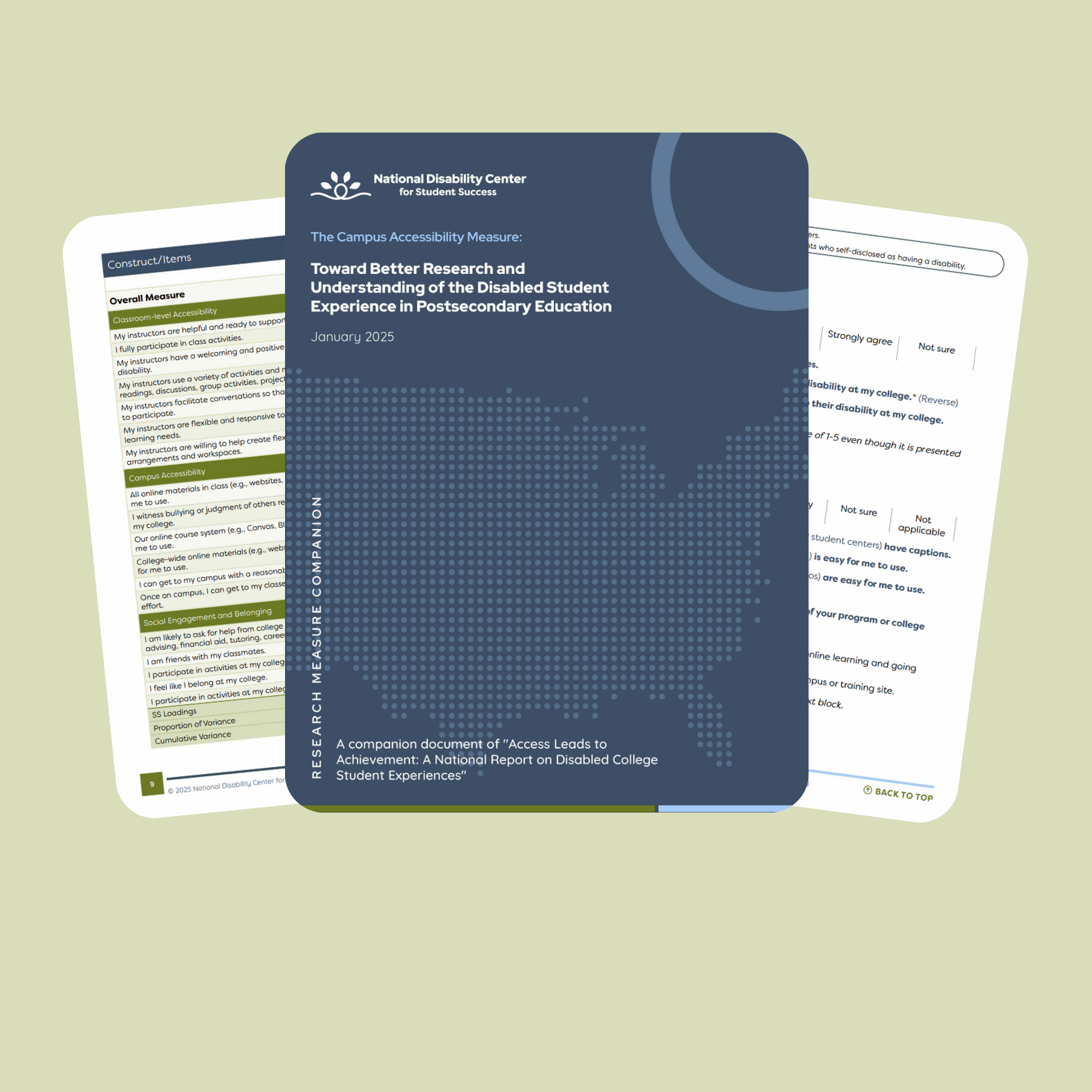
The NP’s Role in School-Based Support for Students with Disabilities

Led by contributors
  • Maria Milazzo, PhD, RN, CPNP-PC
  • Megan Arbour, PhD, RN, CNM, CNE, FACNM
  • Bonni Cohen, PhD, DNP, RN, FNP-C, CNE, FAANP
  • Joanne Keefe, DNP, RN, MPH, FNP, CNE
  • Stephanie Cawthon, PhD
  • This article examines how nurse practitioners can support disabled students through early identification, educational advocacy, transition planning, and collaboration with schools across K-12 and higher education settings.

    Many disabled and neurodivergent students navigate educational systems where health care, accommodations, and academic planning remain disconnected. Delayed identification, inconsistent support, and limited understanding of disability-related laws can affect both educational and health outcomes.

    Drawing from National Disability Center for Student Success data, federal disability law, clinical vignettes, and existing research on neurodivergence, chronic illness, and postsecondary transition, the article outlines how nurse practitioners can support students across primary school, secondary school, and higher education settings.

    The article also examines how nurse practitioners can help students navigate IDEA, Section 504, and ADA protections while strengthening self-advocacy, transition planning, mental health support, and continuity of care.

    What’s Inside:

    43%

    50%

    15%

    Sources: National Disability Center for Student Success (2025); Milazzo et al. (2026).

    Key Findings

    Top Recommendations for Nurse Practitioners

    Supporting disabled and neurodivergent students requires coordination across health care, education, disability services, and transition planning. The findings emphasize that nurse practitioners play an important role not only in clinical care, but also in early identification, advocacy, communication, and long-term student support across educational settings.

    Expand Early Screening

    Move beyond a “wait to fail” model by discussing academic, behavioral, and emotional concerns early. The article encourages including dyslexia, ADHD, and other neurodivergent diagnoses within differential diagnosis conversations.

    Support Family Advocacy

    Validate caregiver concerns, assist with written requests for evaluations, and help families understand IDEA, Section 504, and ADA protections.

    Strengthen Documentation Practices

    Provide documentation that explains how conditions affect major life activities, academic participation, concentration, mobility, or communication to support accommodation eligibility decisions.

    Prepare Students for Self-Advocacy

    Encourage students to practice describing their disability-related needs, accommodations, housing considerations, and support preferences before entering higher education settings. 

    Increase School Collaboration

    Coordinate with school nurses, educators, counselors, disability support services, rehabilitation specialists, and mental health professionals to support continuity of care.

    Support Mental Health Transitions

    Support students navigating anxiety, sensory overload, executive functioning challenges, and independent health management during educational transitions. 

    “Before I disclose [my autism and ADHD], my behavior might seem
    like I don’t care or I’m not trying. But after I talk to them, they’re
    much warmer and understanding.”

    Disabled Student

    References

    1. Daly, B. P., Litke, S., Kiely, J., et al. (2022). Effectively supporting youth with chronic illness in schools. Pediatric Clinics of North America, 69(4), 695-707. https://doi.org/10.1016/j.pcl.2022.04.013

    2. Doyle, N. (2020). Neurodiversity at work: A biopsychosocial model and the impact on working adults. British Medical Bulletin, 135(1), 108-125. https://doi.org/10.1093/bmb/ldaa021

    3. Huynh, G., Masood, S., Mohsin, H., & Daniyan, A. (2024). The impact of late ADHD diagnosis on mental health outcomes in females. Social Sciences & Humanities Open, 10, 100977. https://doi.org/10.1016/j.ssaho.2024.100977

    4. Milazzo, M. C. (2019). Lessons About Living Well at the Intersection of Adolescence and Multiple Sclerosis (Doctoral dissertation). State University of New York, Stony Brook.

    5. National Disability Center for Student Success. (2025). Access Leads to Achievement: A National Report on Disabled College Student Experiences. https://nationaldisabilitycenter.org/resources/national-report/

    6. Stone, L. A., Benoit, L., Martin, A., & Hafler, J. (2023). Barriers to identifying learning disabilities: A qualitative study of clinicians and educators. Academic Pediatrics, 23(6), 1166-1174. https://doi.org/10.1016/j.acap.2022.12.008

    7. US Code. (2025). Education of Individuals with Disabilities; 20 USC Chapter 33, Subchapter I: General Provisions. https://uscode.house.gov/view.xhtml?path=/prelim@title20/chapter33/subchapter1&edition=prelim

    8. Varadaraj, V., Deal, J. A., Campanile, J., Reed, N. S., & Swenor, B. K. (2021). National prevalence of disability and disability types among adults in the US, 2019. JAMA Network Open, 4(10), e2130358. https://doi.org/10.1001/jamanetworkopen.2021.30358

    9. Wisk, L. E., & Sharma, N. (2025). Prevalence and trends in pediatric-onset chronic conditions in the United States, 1999-2018. Academic Pediatrics, 25(4), 102810. https://doi.org/10.1016/j.acap.2025.102810